
Cottage Cheese Thin Pie
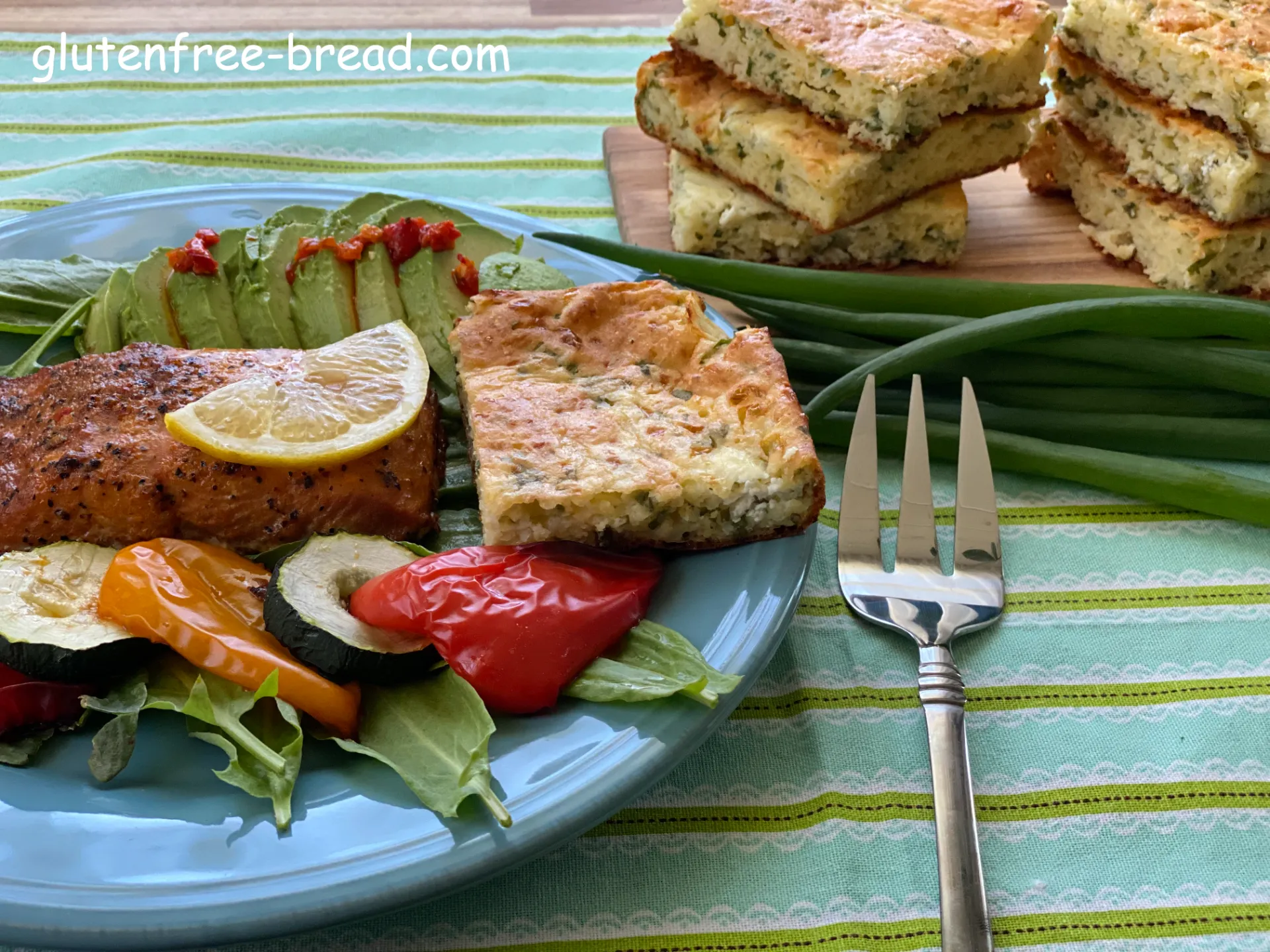
Cottage Cheese Thin Pie with dill and scallions adds a savory twist to the traditional pie.
- Gluten-free
- Low carb
- Sugar-free
- Yeast-free
- Nut-free

- Prep
- Cook
- Total
- Ingredients10
While the Cottage Cheese Thin Pie with dill and scallions may not have the texture or structure of traditional bread, its savory flavor and versatility make it a creative option for various culinary uses. Feel free to experiment and discover new ways to enjoy it as a snack, paired with soup or salad or even as alight breakfast.
Ingredients
Tip
You can also use Oat Flour same amount, or use half and half
Tip
Typically contains 6–8 scallions
Optional Ingredients
Equipment
- Baking Sheet Pan 10x13-inch or 9x13-inch
Instructions
Step 1
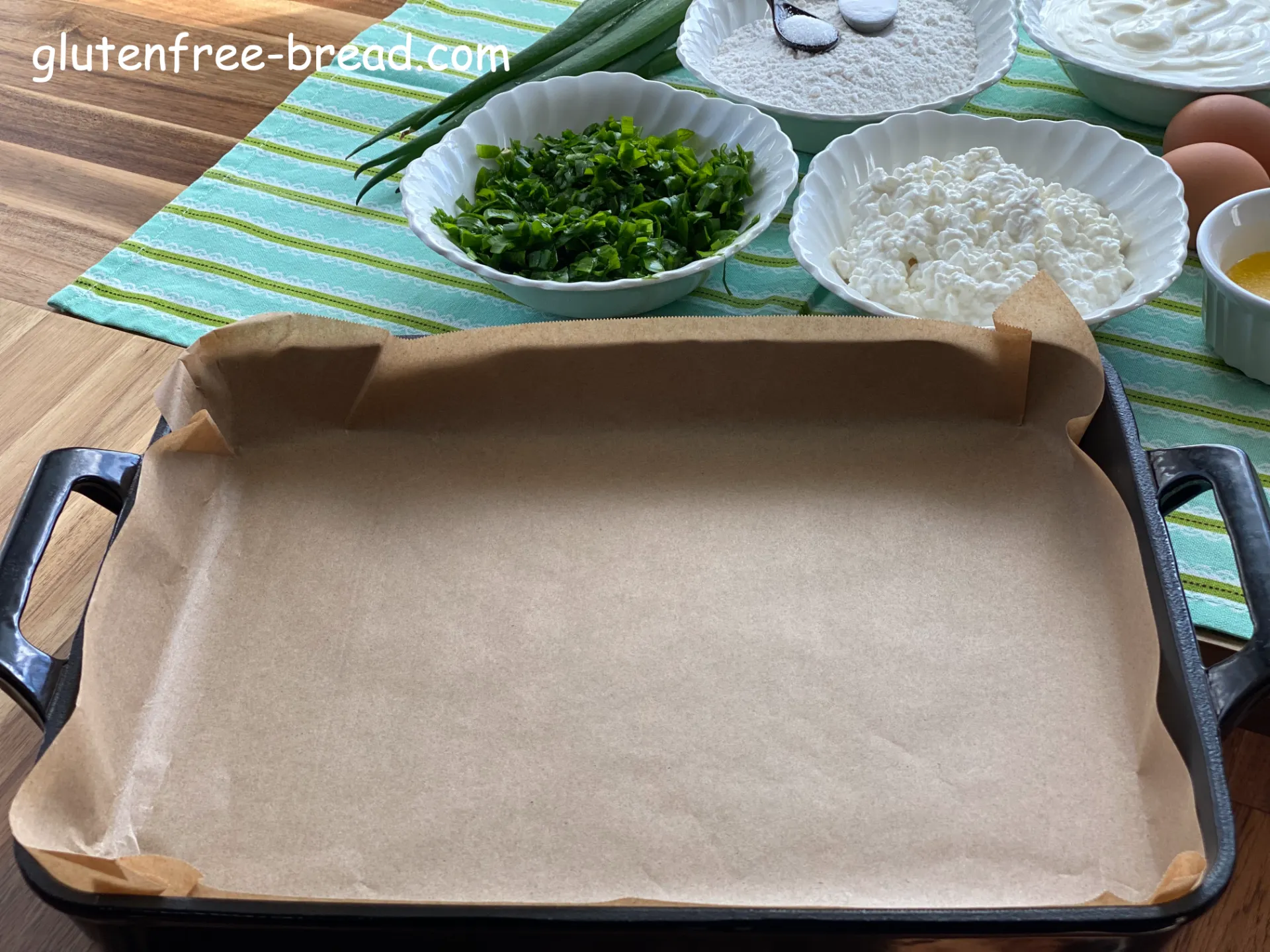
Preheat the oven to 350°F (180°C) and line up the baking sheet pan with parchment paper.
Step 2
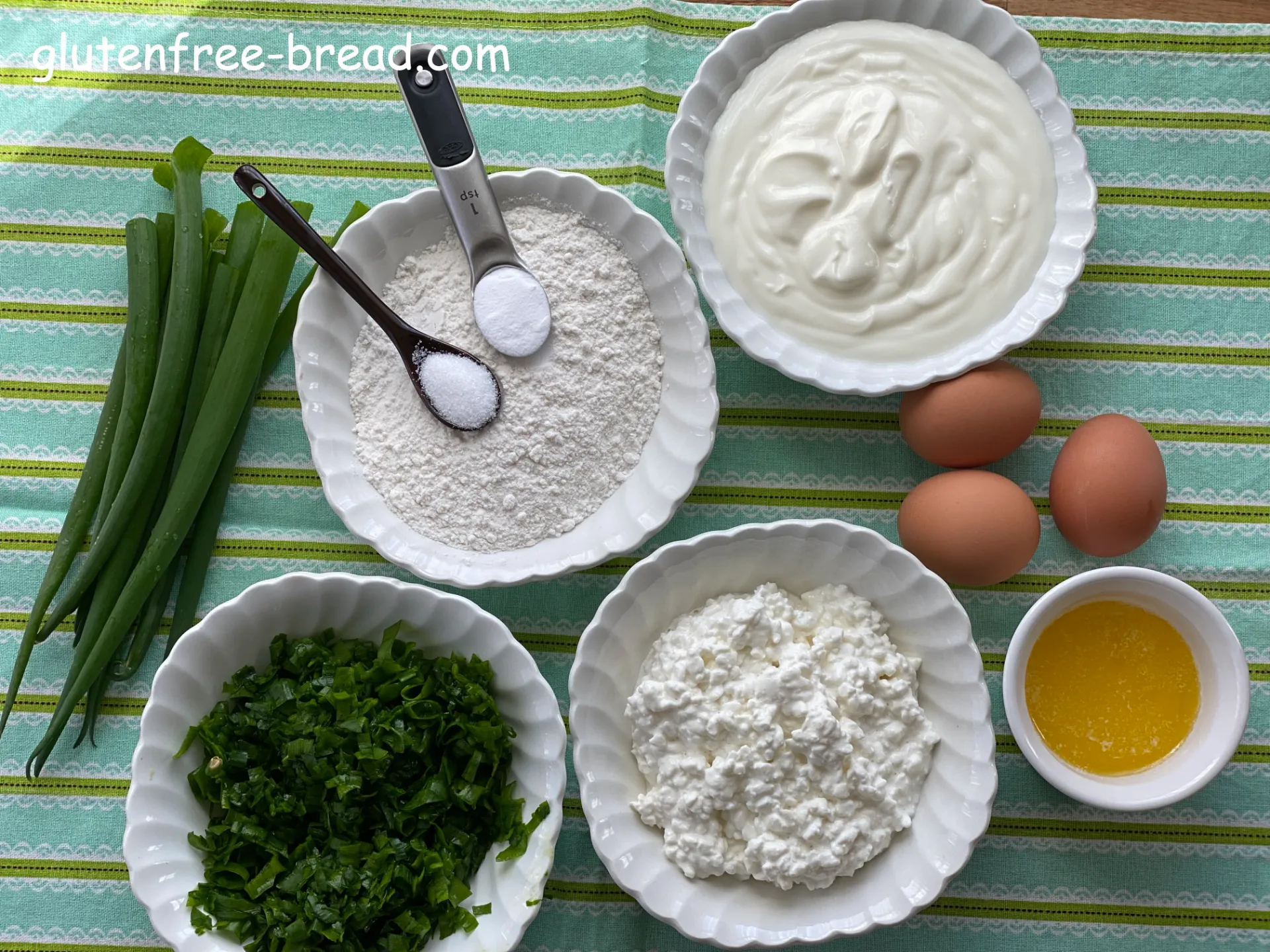
Get ready all the ingredients: cottage cheese (1 1/4 cup), eggs (3), greek yogurt (1 ⅓ cup), butter (3 ½ tbsp), baking powder (1 tsp), salt (1 tsp) and scallions (bunch).
Step 3
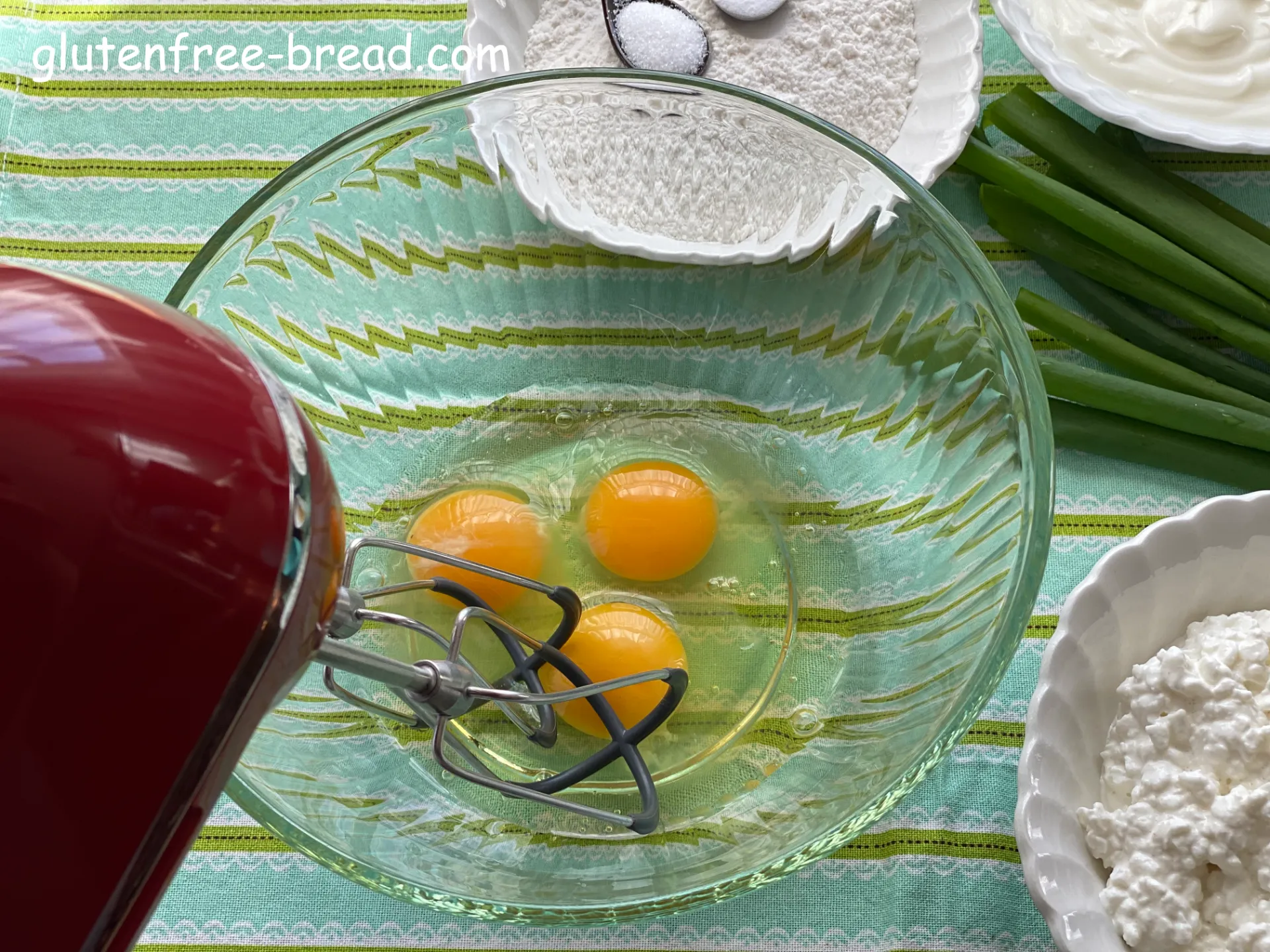
In a mixing bowl, whisk eggs and salt.
Step 4
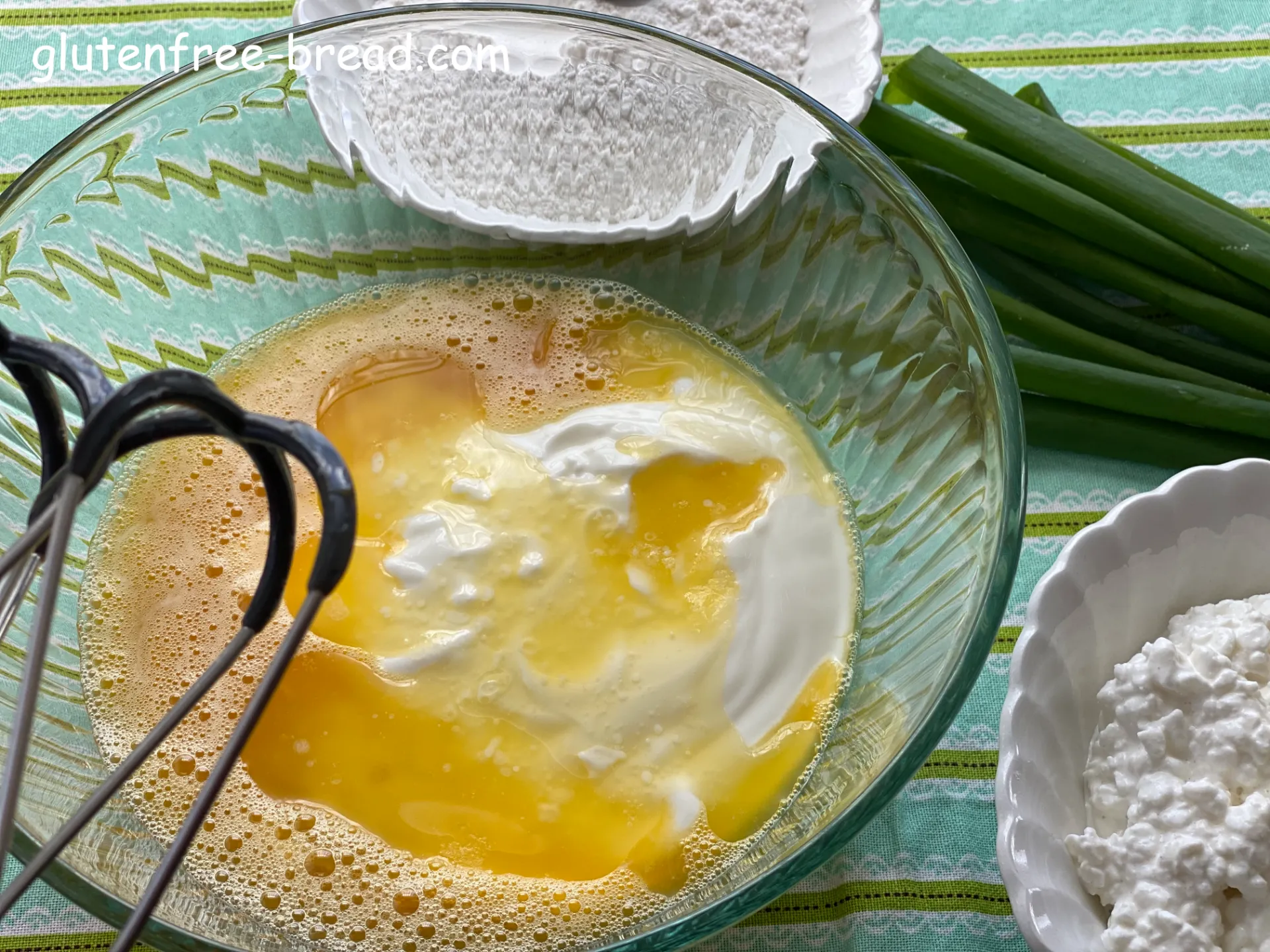
Then add to the egg mixture greek yogurt, cottage cheese and chilled butter, mix well.
Step 5
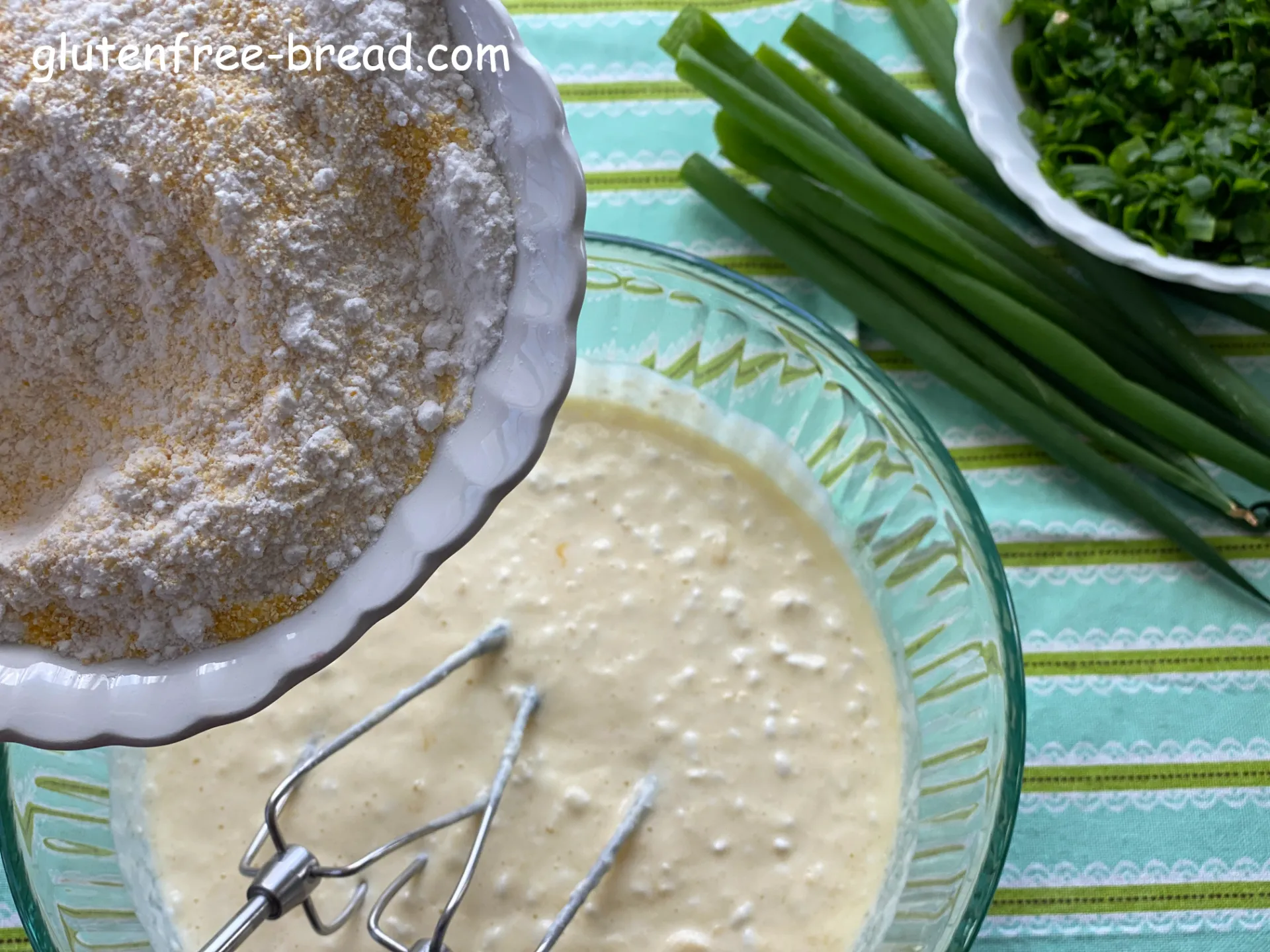
Mix GF flour with baking powder, and add it to the wet ingredients.
Step 6
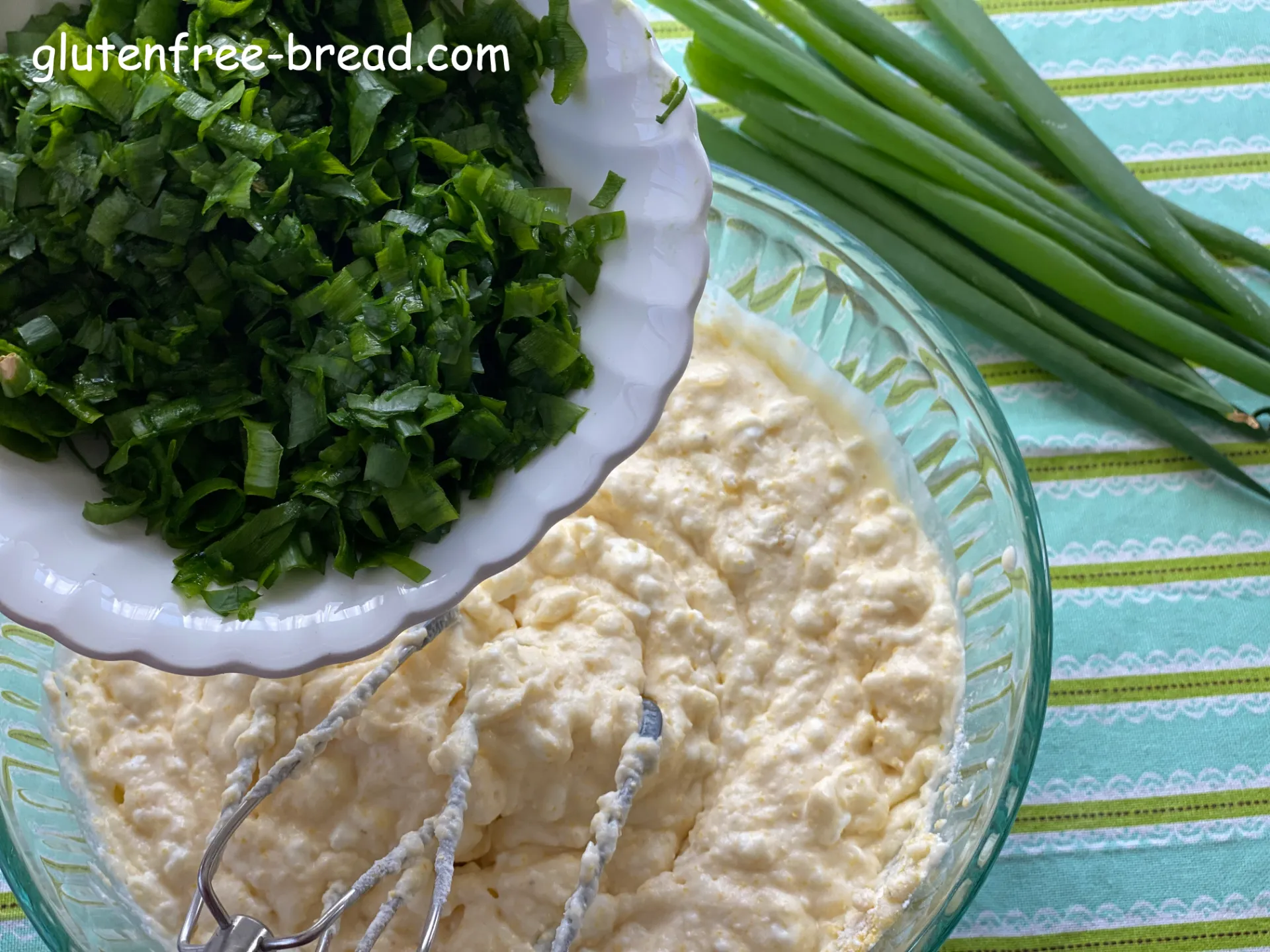
Add to the batter scallions and dill, if using.
Step 7
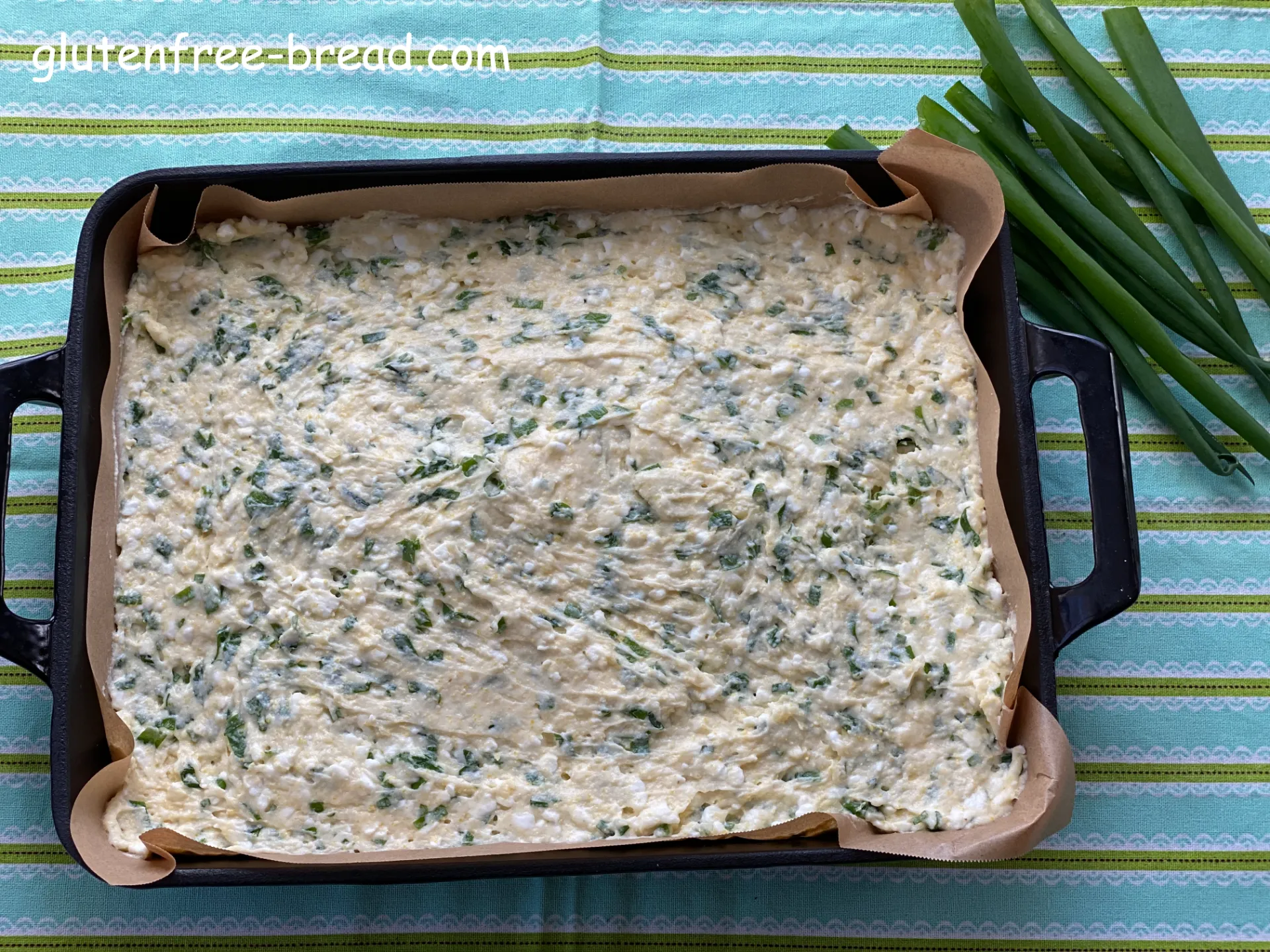
Pour the batter into the prepared baking sheet pan and spread it evenly.
Step 8
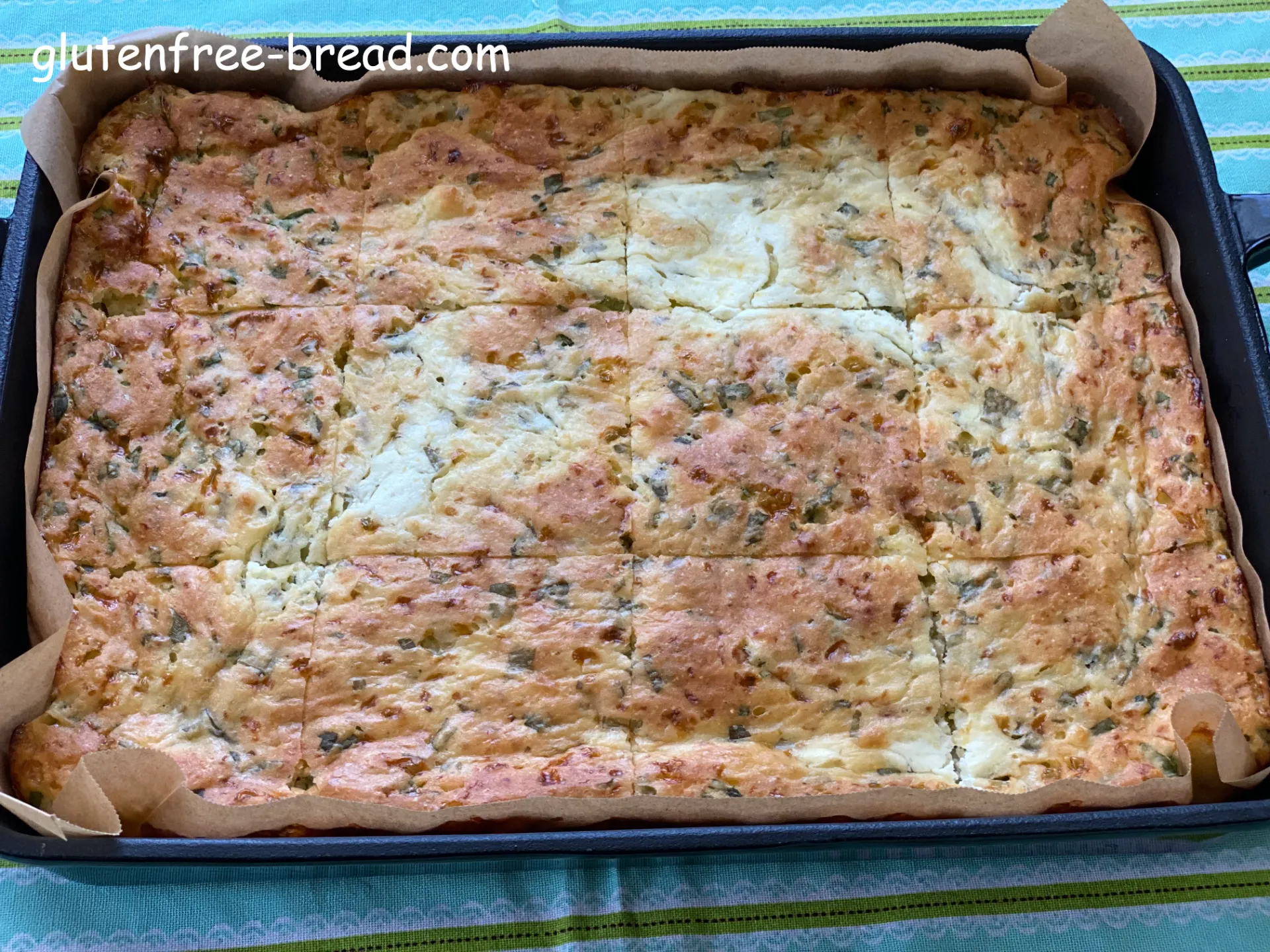
Bake in the preheated oven for 45-50 minutes, or until the batter is set and is golden brown.
Step 9
Allow the pie to cool slightly before slicing and serving.
Tips
Cottage cheese is a nutritious dairy product that offers several health benefits. Here are the key nutritional components found in cottage cheese per 100 grams:
Protein: Cottage cheese is known for its high protein content, providing approximately 11 grams per 100 grams. Protein is essential for muscle growth and repair, as well as for supporting a healthy immune system.
Fat: Cottage cheese contains about 4 grams of fat per 100 grams. The fat content can vary depending on the type of cottage cheese (e.g., low-fat, regular, or full-fat varieties).
Carbohydrates: Cottage cheese is relatively low in carbohydrates, with approximately 3 grams per 100 grams. This makes it a suitable choice for those following low-carb diets.
Calcium: Cottage cheese is a good source of calcium, providing about 83 mg per 100 grams. Calcium is crucial for maintaining strong bones and teeth, as well as for proper muscle and nerve function.
Phosphorus: It contains around 142 mg of phosphorus per 100 grams, which works together with calcium to support bone health and structure.
Sodium: Cottage cheese contains approximately 364 mg of sodium per 100 grams. People who need to watch their sodium intake should choose low-sodium varieties.
Potassium: It provides about 87 mg of potassium per 100 grams. Potassium is important for maintaining healthy blood pressure and proper heart function.
Vitamin B12: Cottage cheese contains about 0.4 µg of vitamin B12 per 100 grams. Vitamin B12 is essential for red blood cell formation, neurological function, and DNA synthesis.
Overall, cottage cheese is a nutrient-dense food that can be a valuable addition to a balanced diet, especially for those looking to increase their protein intake or incorporate more dairy products into their meals.
Notes & troubleshooting
While the Cottage Cheese Thin Pie with dill and scallions is not typically designed to be used as a bread, its thin and savory nature could make it suitable for certain applications. Here are a few ways you might be able to use it in place of bread:
1. Open-Faced Sandwiches:
- Slice the thin pie into smaller portions and use them as a base for open-faced sandwiches.
- Top with ingredients like sliced tomatoes, avocado, cucumber, smoked salmon, or thinly sliced meats for a tasty and unique sandwich option.
2. Appetizer Bites:
- Cut the thin pie into bite-sized squares or triangles and serve them as appetizers.
- Top each piece with a dollop of sour cream or Greek yogurt, a small piece of smoked salmon or prosciutto, and a sprig of fresh dill for an elegant appetizer.
While the Cottage Cheese Thin Pie with dill and scallions may not have the texture or structure of traditional bread, its savory flavor and versatility make it a creative option for various culinary uses. Feel free to experiment and discover new ways to enjoy it!
Flours used
You might also like
-
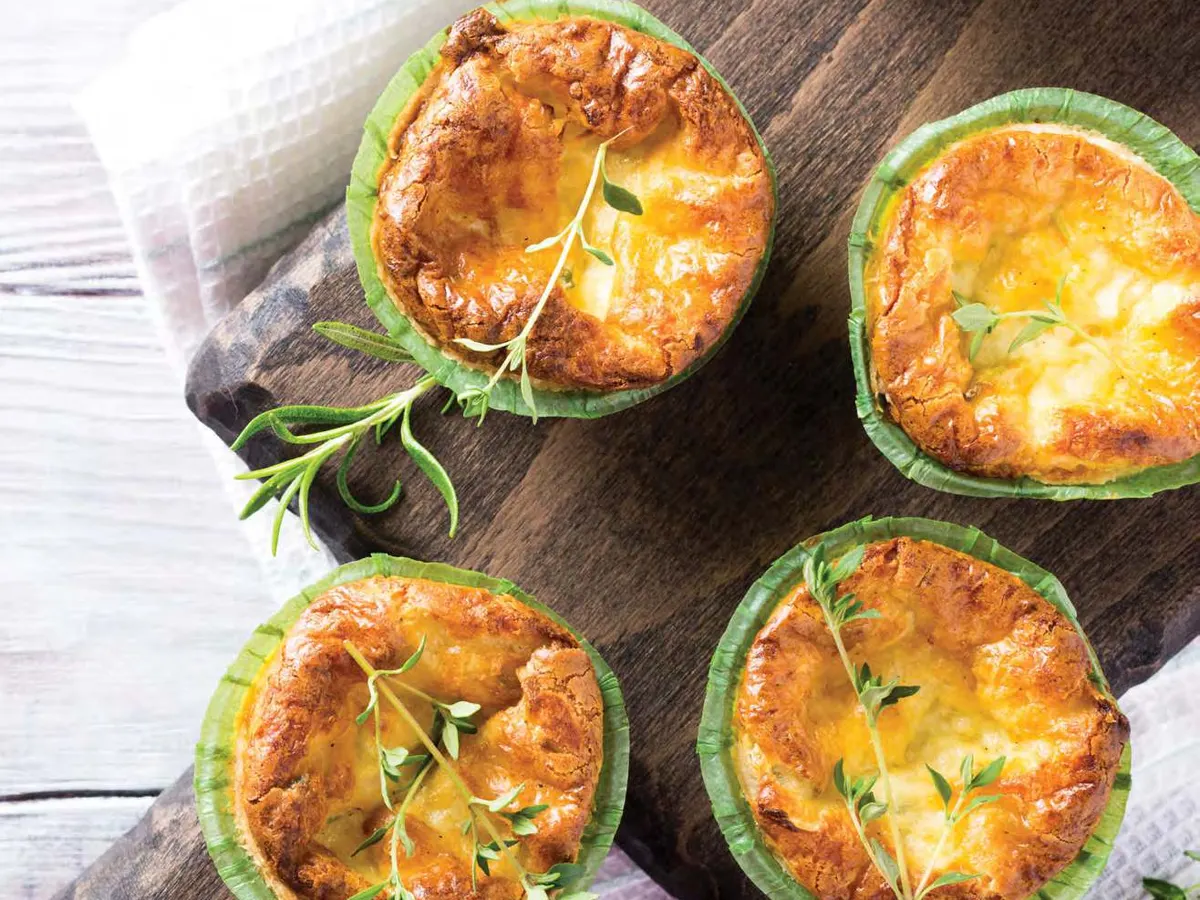
Cheddar and Leek Mini Quiches
- Sugar-free
- Yeast-free
- Nut-free
-
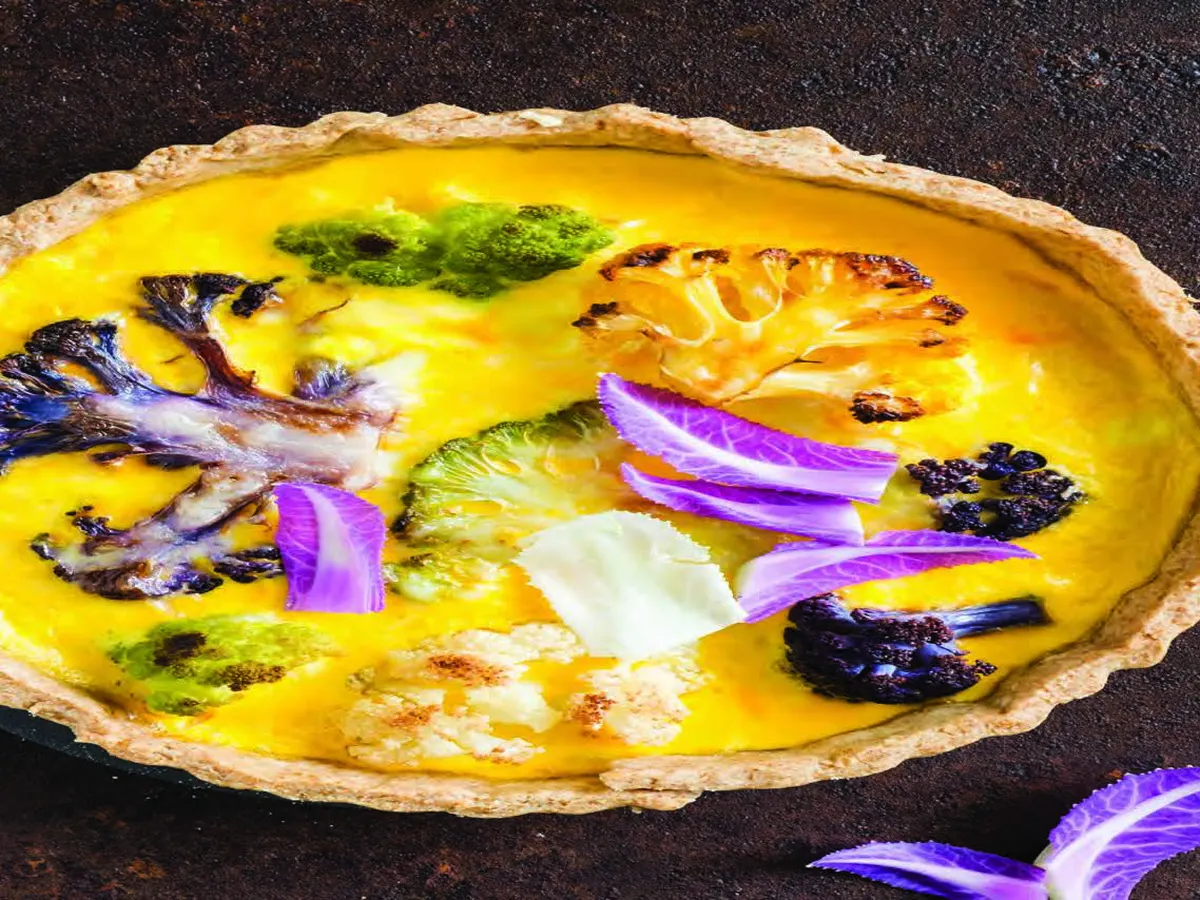
Rainbow Cauliflower and Cheddar Quiche
- Sugar-free
- Yeast-free
- Nut-free
-
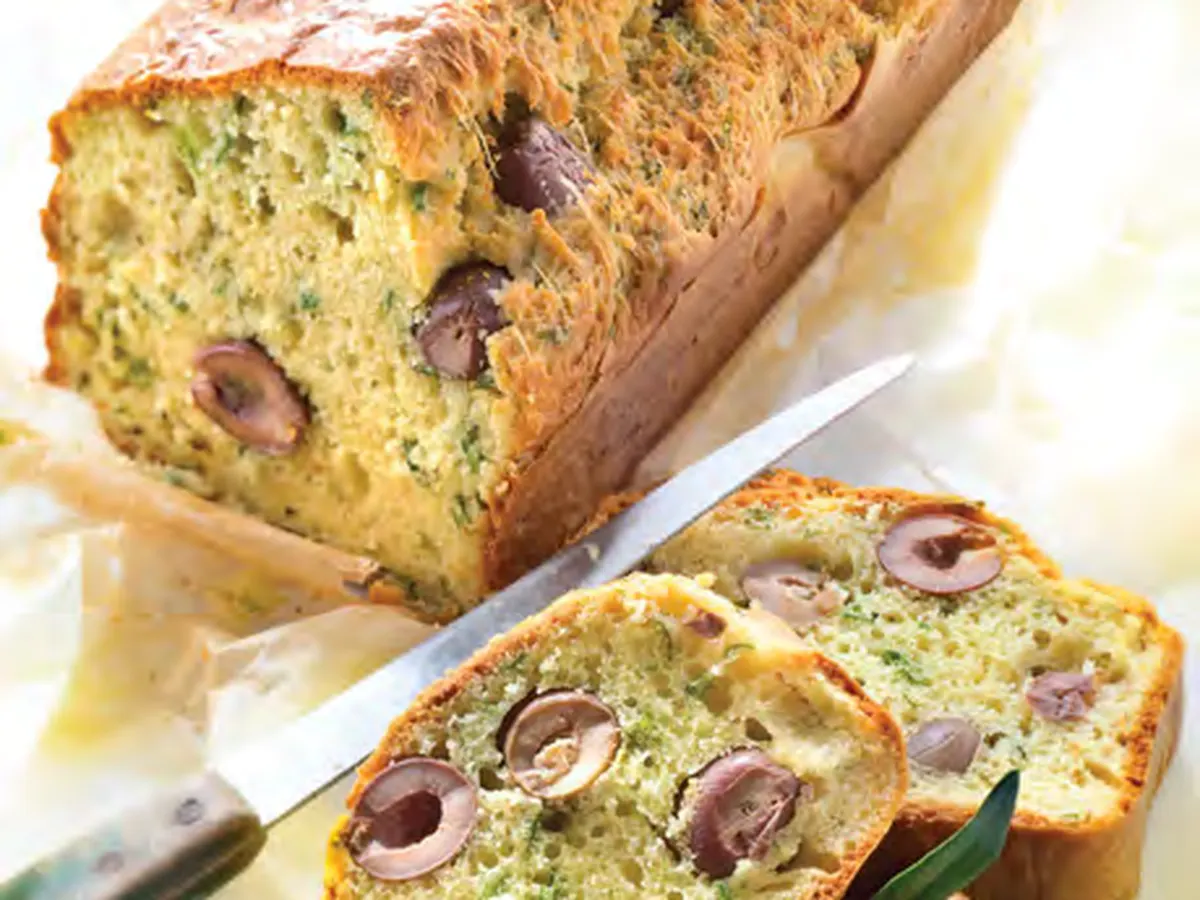
Olive, Parmesan and Herb Loaf Cake
- Sugar-free
- Yeast-free
- Nut-free
-
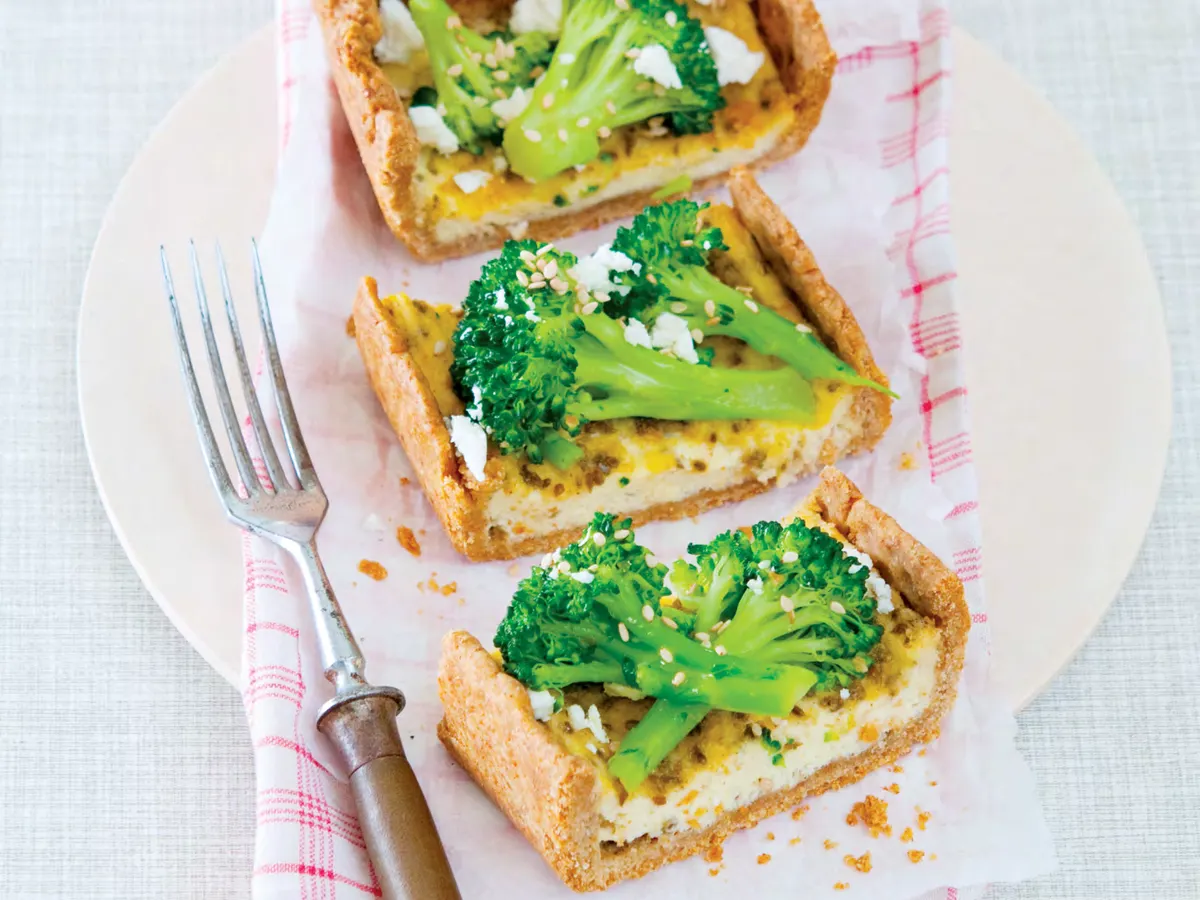
Feta and Flaxseed Loaf Tin Quiche with Broccoli
- Sugar-free
- Yeast-free
- Nut-free